
Our language for AI
This piece will go into the language and cultural influences that play into our collective imagining of learning machines. We keep using new words to better define concepts that we have known for a while that reflect our improving understanding of these concepts. This evolution of language has kept step with the growing impact of AI in the popular and business cultures. The leading influencers and their works have shaped and will continue to shape the conversation around AI – grounding our perspective in their imaginations will help us understand what’s coming.
| This segment will cover: | |
|---|---|
| 1 | AI in popular culture |
| 2 | AI in business culture |
| 3 | Human brains vs. computer brains |
AI in popular culture
Science fiction, along with comics books, has increasingly entered mainstream culture. It seems like we have become fascinated with how new technologies could affect our behaviours, living conditions and societal norms – this is something we have been exploring for a while in long-lasting shows like Star Trek but with Black Mirror, West World and Fringe, these concepts have entered the popular mainstream. Many of the current franchises draw inspiration from earlier works – The Matrix gathered many ideas from Ghost in the Shell1 and Alien drew concept art inspiration from Alejandro Jodorowsky’s unsuccessful attempt to adapt Dune2. These popular works represent the possible projections of futurists who have freed themselves from current technological limitations to explore currents trends and potential changes to their zenith.
Some popular favourites

Ghost in the Shell explores what is the difference between human and machine when we share worlds 
Asimov’s Three Laws still influences AI ethics 
Dune explores human vs. machine potential 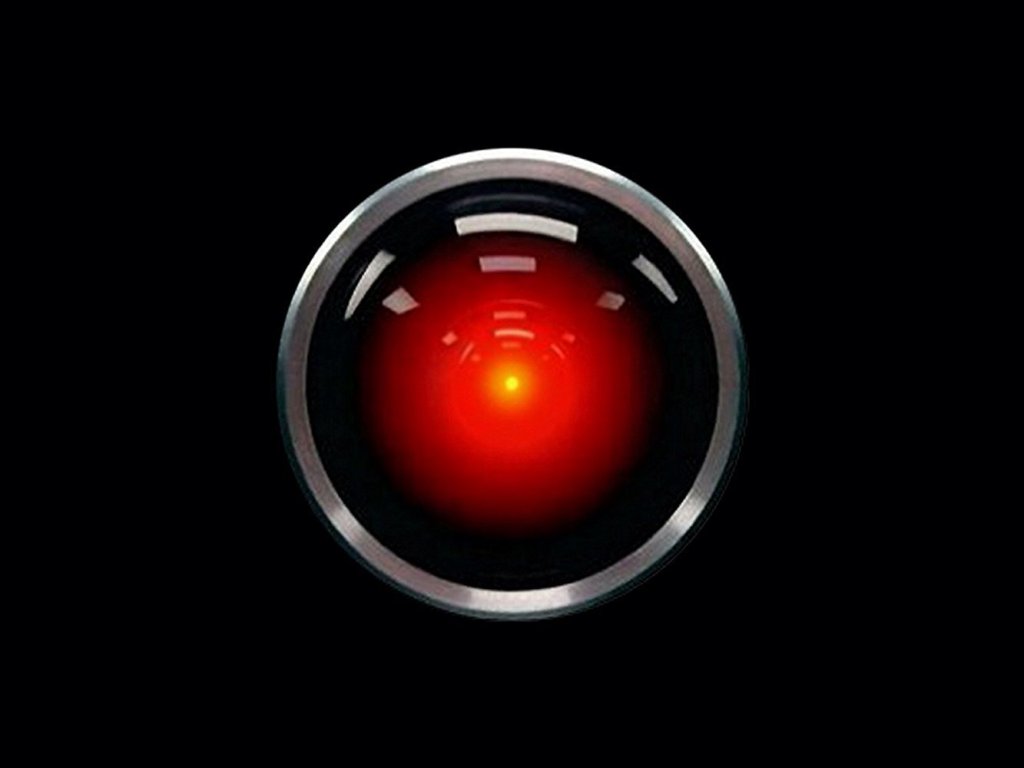
One of the pivotal machine characters – HAL mutinies against the human crew as they journey through space
What should we learn from this?
Each of the works referenced above explores pivotal ideas related to the application and possible futures around AI, and they all focus around a central theme – will AI evolve in concert with human evolution? Are our destinies linked? How should the unique potential of silicon and biological circuits be explored to further develop the capabilities of each? While these ideas are not the dominant voices in the application of AI and Machine Learning to today’s problems, they do help place these new advancements in the capabilities of machines in a historical and societal context.
When the industrial revolution happened in the early 1900s, we experienced a tremendous advancement in our capabilities in many different arenas including transportation, agriculture, manufacturing and war. This revolution did improve our shared levels of wealth but our irresponsibility with the new technologies created problems like the wrongly use of child labour and death in war on a scale previously unknown. This is why business leaders like Elon Musk are actively warning us about the dangers related to AI3. Yes, AI presents a tremendous opportunity but it also presents tremendous risk for humanity if we reach singularity the wrong way.
AI in the business community
Business problems tend to revolve around two types of opportunity – either we increase revenues or decrease expenses to create more value and profits. AI is generally being employed to solve problems that businesses and people currently have or is being used to replace humans or improve human efficiency. The clearest example of business leaders who are leading the adoption of AI are any of the technology companies, based out of the US and globally. Microsoft with their Office solutions have enormously improved our ability to take collective, reasoned action and Google has improved our ability to discover information in a profound way.
It’s difficult to separate out individual leaders from companies that have had a more profound impact than the teams they were a part of – was Bill Gates bigger than Microsoft or Sergey Brin bigger than Google? Does Sergey deserve more of the credit for the AI infrastructure at Google than Jeff Dean4? Should we give more attention to Ray Kurzweil who, with NASA and Google, started a transformational technology training program for business leaders called Singularity University5? Or should we attend to the series of leading academics who developed the application of Neural Networks since the 1940s6? My view is that teams are always bigger than individuals and while we recognize large contributors to the business community, many individuals are best recognized as parts of teams.

Industry giants 
Internet police 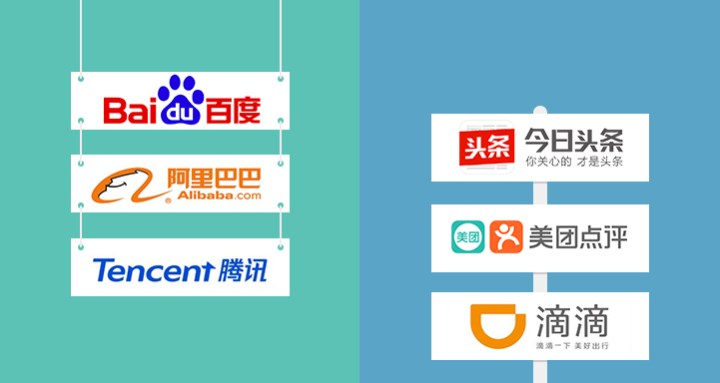
Rising tide 
Machine designers
FAMGA
The major software leaders out of Silicon Valley have each developed clear leadership in the application of AI to their specific domains of expertise. Facebook has had to deeply invest in the use of AI develop social media platforms that connects people while advertising directly to them and with recent public scrutiny over their data protection and platform moderation policies, they’re publicly donating to AI ethics groups.7 Apple and Google have both applied AI in many different contexts and have gone as far as creating Machine Learning models called Create ML and TensorFlow that can be trained by 3rd parties on different data sets to have complex data processing in more applications.
All companies have invested in voice assistant and chat bot software, buying many valuable companies who have demonstrated leading Machine Learning systems. Google spent US$400 M in 2014 to buy DeepMind – a leading Deep Learning team – and Apple closing out 2019 with 20 acquisitions of AI companies since 2010.8 There are companies with more budget and money than they have talent and ideas. In order to maintain a competitive edge in this key new technology and as long as their current products are cash cows, these tech leaders are going to continue to buy up teams while exploring products that maintain their positions as customer acquisition channels and technology platform business models.
Palantir
The increasing reach of the digital world and the possibilities around the use of data to monitor people has given rise to organizations who work to reveal trends in aberrant individual and group behaviours. The reach of these organizations into our digital records and real world observation devices has given a lot of people privacy and safety concerns on use of these technologies. Palantir is just one example from the USA but there are others out of Israel like the NSO Group that allegedly was able to hack WhatsApp to monitor private conversations10 and the ‘world’s most valuable AI startup’11 out of China called SenseTime that provides facial recognition and monitoring systems primarily for the Chinese government.
BAT & TMD
These are the big companies coming out of China right now in two big waves – the first wave of companies with Baidu in search, Alibaba in logistics and Tencent in social media has recently been followed by Toutiau in digital content, Meituan-Dianping for mobile shopping, and, Didi Chuxing in ride-hailing. The BAT companies had an average valuation of $316 B in April 201912 with Alibaba and Tencent definitely in a tier all of their own, and each taken a king-maker role in the Chinese tech ecosystem.
China still protects many domestic markets, especially technology-focused ones deemed to have long-term social value, through discounted financing13 and outright bans of foreign competitors14 deemed to threaten the Great Firewall.15 It’s worth noting that most companies fail to enter Chinese markets primarily from lack of local market understanding and operational capability. These barriers have helped create an environment for the first and second waves of Chinese companies that are behaving a lot of FAMGA by buying outright or controlling interest in AI companies, all around the world. Given the active role of the Chinese state in many domestic markets and strategic companies, many of these acquisitions are closely scrutinized as nations around the world recognize the critical important of domestic AI capabilities.16
Mobileye and Intel
Using machines to make decisions that affect physical objects or comprehend complicated situations in the real, physical world is a highly complex process. It requires that the computer systems are able to read, process and act upon huge data sets and take decisions with very low margins of error. Companies with products that enable computer systems to reliably make decisions and control machines in the real world are blending together our digital and physical worlds. Mobileye is a great example of a company merging these worlds and an even better example with Intel of how important hardware is for effective AI systems.
Mobileye designs computer chips and software systems for machine assisted driving – it was acquired by Intel in 2017 and counts Nissan, Audi, BMW and other auto-industry leaders among its customers. Edge and cloud technology providers need companies like Mobileye and Intel to design the hardware needed to process data quickly, with value added software for specific use cases. FAMGA, BAT, TMD and other companies who don’t have a popular acronym yet will continue to rely on companies like Intel and Nvidia to make it possible for their systems to run. After all, Neural Networks and Deep Learning was first theorized in the 1940s and hardware or processor limitations will continue to place important limitations on what’s achievable as we move forward.1718
Human vs. silicon brains
The big take away from this section is to recognize the differences between our potential and current capabilities and those of machines. We are still exploring the potential that we have within us and along that journey, we have created new creatures with very different characteristics. They can be stronger, faster and more intelligent that us, but currently are only stronger and more intelligent that us in some ways. These creatures deliver best when they are presented only with digital data and in controlled, non-random environments. However, when processing the data, they are much, much faster than us and for as long as they have energy, their attention to detail will never wane. It can also be very, very expensive to create and teach one of these creatures so companies with a lot of cash and a lot to lose will be playing a part part of their ecosystem.
At the moment, there are fundamental differences in how our brains function and how silicon circuits do. Humans are better at processing entirely new data that has never been seen before and making sense of it quickly. We can also communicate our understanding of this information more easily and more reliably. Machines can process much more information than we can and produce more consistent judgements based off the information provided. Their ability to be fair-minded and effective in those judgements will be based off the design and training that we give to these creatures. Markets, as ever, will the decision-making mechanisms for how we apply these creatures to solve problems and we will have to be wise in our use of them to ensure that when we lose control of the horse, it’s running in the right direction.
 Ryan Guichon